Have you ever looked at your dog and caught them giving you a funny sideways glance? That unforgettable expression, often called the dog side eye, has become one of the internet’s favorite dog memes. While it can be hilarious, many pet owners wonder whether it means their dog is annoyed, guilty, nervous, or simply being playful.
The truth is that a dog’s side eye can have different meanings depending on the situation. Dogs communicate through body language much more than words, and their eyes are one of the biggest clues to how they feel. Understanding these signals can help you strengthen your bond and respond to your dog’s emotions more effectively.
In this guide, you’ll learn what a dog side eye really means, why dogs do it, how to recognize different situations, when it’s completely normal, and when it might indicate stress or discomfort. You’ll also discover common myths, practical tips, and expert advice to better understand your furry friend.
What Is Dog Side Eye?
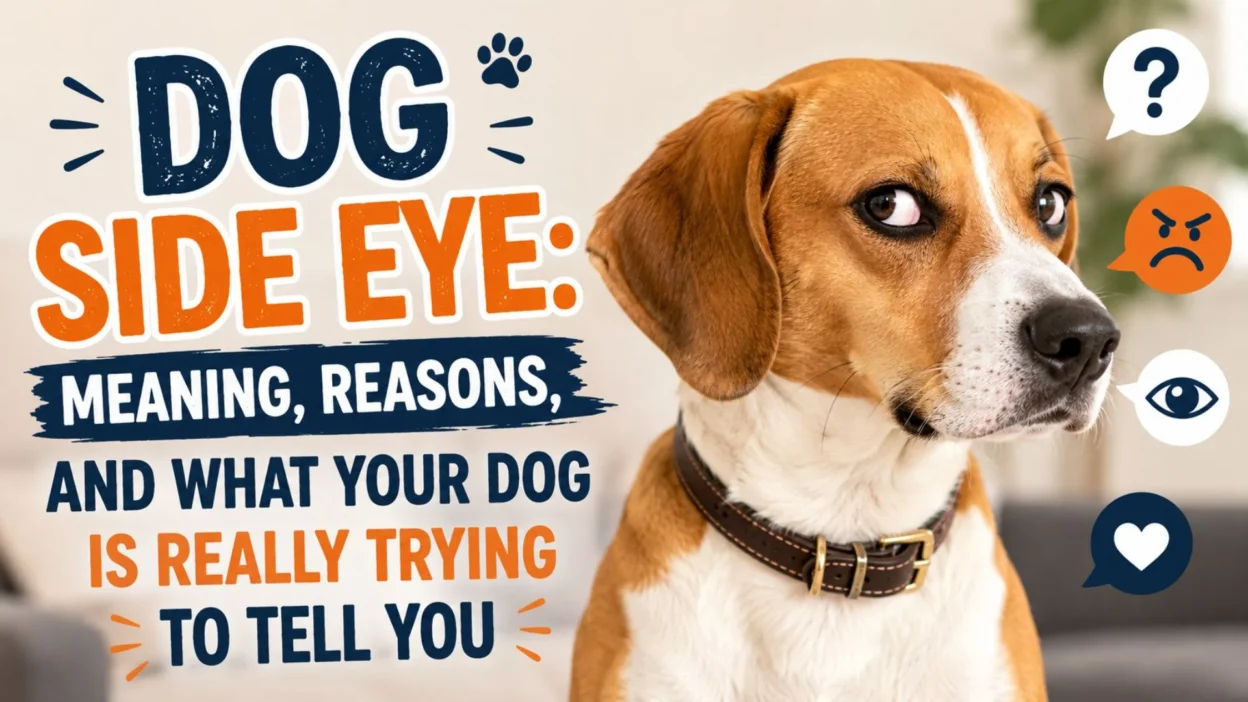
Dog side eye refers to the expression a dog makes when it looks sideways without fully turning its head. Often, you’ll notice the white part of the eye showing, a look that many people call whale eye.
Sometimes this expression is funny and harmless. Other times, it can be a sign that your dog feels uncomfortable, anxious, or wants more space. The meaning always depends on your dog’s overall body language and the situation around them.
Why Do Dogs Give Side Eye?
Dogs use facial expressions as part of their natural communication. A side eye isn’t a language on its own—it’s one piece of a much larger picture.
Common reasons include:
- Feeling uncomfortable
- Protecting food or toys
- Being surprised
- Feeling anxious
- Watching something carefully
- Avoiding direct eye contact
- Playful curiosity
- Mild annoyance
- Uncertainty about a situation
- Reacting to unfamiliar people or pets
Is Dog Side Eye Always a Bad Sign?
Not at all.
Many viral photos show dogs giving dramatic side eye that simply captures a funny moment. Your dog might be watching you while relaxing on the couch or reacting to a strange noise across the room.
However, if the side eye appears together with other signs of stress, it deserves more attention.
Watch for:
- Stiff body posture
- Tucked tail
- Flattened ears
- Lip licking
- Growling
- Freezing in place
- Avoiding touch
These signals together may indicate your dog wants more personal space.
Understanding “Whale Eye”
One of the most recognized forms of dog side eye is called whale eye.
This happens when the white portion of the dog’s eye becomes clearly visible because they’re looking sideways while keeping their head mostly still.
Whale eye may appear when a dog:
- Is guarding a favorite toy
- Doesn’t want to be hugged
- Feels cornered
- Is nervous during grooming
- Feels uncomfortable around another animal
- Is uncertain in a new environment
Recognizing whale eye early helps prevent situations from escalating into fear or defensive behavior.
Common Situations Where Dogs Give Side Eye
Everyday life offers many harmless moments where dogs show this expression.
During Mealtime
Some dogs keep an eye on anyone approaching their food bowl without moving away from their meal.
Around Favorite Toys
Dogs may glance sideways while holding a treasured toy, especially if another pet comes close.
During Bath Time
Many dogs dislike baths and may repeatedly give side eye as they anticipate what’s coming next.
At the Vet
An unfamiliar environment, strange smells, and handling can all trigger nervous body language.
When Being Hugged
Not every dog enjoys hugs. A side eye during cuddling may suggest your dog would rather have a little more space.
Hearing Strange Sounds
Unexpected noises often make dogs monitor their surroundings while staying still.
What Your Dog’s Body Language Is Telling You
Eyes are only one part of canine communication.
Pay attention to the complete picture.
A relaxed dog usually has:
- Soft eyes
- Loose muscles
- Relaxed ears
- Gentle tail movement
- Calm breathing
A stressed dog may display:
- Wide eyes
- Visible eye whites
- Stiff body
- Tucked tail
- Closed mouth
- Lip licking
- Yawning during stressful situations
The more signals you observe together, the easier it becomes to understand how your dog feels.
Dog Side Eye vs. Guilty Look
Many owners believe their dog looks guilty after making a mess.
Research suggests dogs aren’t necessarily expressing guilt. Instead, they’re often responding to their owner’s tone of voice or body language.
That sideways glance may actually reflect uncertainty, nervousness, or anticipation rather than an understanding that they did something wrong.
Funny Dog Side Eye Moments Everyone Recognizes
The internet loves the dog side eye because it perfectly captures expressions that seem surprisingly human. While dogs aren’t judging us the way people do, their facial expressions often make it look that way.
Here are some classic situations where you’ll probably spot the famous side eye:
- You say, “It’s bath time.”
- You stop petting them too soon.
- You eat a snack without sharing.
- You bring out the vacuum cleaner.
- You tell them it’s time to leave the dog park.
- You move them from their favorite spot on the couch.
- You put a silly costume on them.
- Another dog gets more attention.
- You accidentally wake them from a nap.
- You interrupt their squirrel-watching session.
These moments often become hilarious photos, but they’re also reminders that dogs communicate through subtle body language.
Dog Side Eye in Popular Culture
Social media has turned the dog side eye into one of the most recognizable pet expressions online. From TikTok videos to Instagram memes, countless dog owners share snapshots of their pets giving what looks like a judgmental stare.
The popularity comes from how relatable the expression feels. Whether a dog is watching its owner dance, refusing a new toy, or reacting to an unusual sound, the side eye often creates comedy without any words.
Many viral captions include phrases like:
- “Really?”
- “You’re serious?”
- “I can’t believe this.”
- “Not again.”
- “Excuse me?”
- “You’ve got to be kidding.”
Of course, these captions are just for fun. Dogs aren’t actually thinking these exact phrases, but their expressions certainly spark our imagination.
Is Dog Side Eye a Sign of Aggression?
Not necessarily.
A dog giving side eye isn’t automatically aggressive. In many cases, it’s simply observing something while feeling unsure or cautious.
However, if the side eye appears with warning signals, it’s best to respect your dog’s space.
Watch for combinations such as:
- Growling
- Snarling
- Raised hackles
- Stiff posture
- Showing teeth
- Freezing
- Hard staring
When several of these signs appear together, avoid forcing interaction and give your dog time to relax.
How to Respond When Your Dog Gives Side Eye
The best response depends on the situation.
If your dog appears relaxed, there’s usually nothing to worry about. If they seem uncomfortable, a few simple steps can help.
- Give them personal space.
- Avoid forcing hugs or cuddles.
- Speak in a calm, reassuring voice.
- Remove any obvious source of stress.
- Reward relaxed behavior with praise.
- Watch their overall body language.
- Let them approach you on their own terms.
Understanding your dog’s comfort level helps build trust and reduces unnecessary stress.
Common Myths About Dog Side Eye
Many misconceptions surround this famous expression. Let’s separate fact from fiction.
Myth: Dogs Give Side Eye Because They’re Guilty
Not always. Dogs usually respond to your emotions and body language rather than feeling guilt in the human sense.
Myth: Every Side Eye Means Aggression
False. Many dogs simply glance sideways while remaining completely relaxed.
Myth: Side Eye Always Means Anger
A dog may be curious, uncertain, surprised, or simply watching something nearby.
Myth: It’s Just a Funny Face
Sometimes it is—but sometimes it’s an important communication signal. Context always matters.
How to Build Better Communication With Your Dog
Learning canine body language is one of the best ways to strengthen your relationship.
Instead of focusing only on facial expressions, observe your dog’s entire body. Pay attention to posture, ears, tail, movement, and the environment around them.
The more time you spend understanding these signals, the easier it becomes to recognize when your dog feels happy, excited, nervous, or needs a little extra space.
Dogs communicate honestly. It’s up to us to learn their language.
Interesting Facts About Dog Side Eye
- Dogs communicate more through body language than vocal sounds.
- Visible eye whites are commonly called “whale eye.”
- Every dog has its own unique facial expressions.
- Puppies can also display side eye while learning about new experiences.
- Stress isn’t the only reason for side eye—curiosity can cause it too.
- Many viral dog memes feature completely harmless side-eye moments.
- Understanding body language can help prevent misunderstandings between dogs and people
Frequently Asked Questions
Why does my dog give me side eye?
Your dog may give you side eye because they’re curious, unsure, protecting something they value, or feeling slightly uncomfortable. Look at their overall body language to understand the real meaning.
Is dog side eye a sign that my dog is angry?
Not always. Side eye alone doesn’t mean aggression. If your dog has a relaxed body, wagging tail, and soft posture, the expression is usually harmless. A stiff body or growling alongside side eye may indicate stress.
What is whale eye in dogs?
Whale eye is when the white part of a dog’s eye becomes visible while they look sideways. It often suggests the dog is feeling anxious, uncomfortable, or wants more space, although context is always important.
Should I be worried if my dog gives me side eye?
Most of the time, there’s no reason to worry. However, if the side eye happens repeatedly with warning signs like growling, freezing, lip licking, or raised hackles, it’s best to give your dog space and identify what’s causing the stress.
Can puppies give side eye too?
Yes. Puppies can show side eye when they’re exploring new environments, meeting unfamiliar people, or experiencing situations that make them feel uncertain.
How can I make my dog feel more comfortable?
Respect your dog’s personal space, avoid forcing physical affection, use positive reinforcement, and provide a calm environment. Building trust over time helps your dog feel safer and more confident.
Final Thoughts
The dog side eye may be one of the funniest expressions you’ll ever see, but it’s also an important part of canine communication. While social media often turns these moments into entertaining memes, your dog’s sideways glance can reveal valuable clues about their emotions.
The key is to look beyond the eyes. Consider your dog’s posture, tail position, ears, surroundings, and the situation they’re in. A relaxed dog giving side eye is usually just being observant or curious, while a tense dog may be asking for space or expressing discomfort.
By learning to recognize these subtle signals, you’ll better understand your furry companion, avoid unnecessary stress, and strengthen the bond you share. Every dog communicates differently, so paying attention to your own pet’s unique body language is the best way to ensure they feel safe, happy, and understood.
Conclusion
The dog side eye is more than just a funny expression that fills social media feeds—it’s an important part of how dogs communicate. While many side-eye moments are harmless and even adorable, they can also signal curiosity, uncertainty, or mild discomfort depending on the situation. Understanding the context and your dog’s overall body language is the key to interpreting what they’re trying to tell you.
Rather than focusing only on their eyes, pay attention to their ears, tail, posture, and surroundings. These clues provide a much clearer picture of your dog’s emotions and needs. By recognizing and respecting these signals, you can build greater trust, reduce stress, and strengthen your relationship with your furry companion. Whether your dog is giving a playful glance or asking for a little space, learning to read their body language will help you become a more confident and caring pet owner.

Awais Bilal is the author of NameifyHub, sharing unique and creative name ideas for pets, teams, and more.